
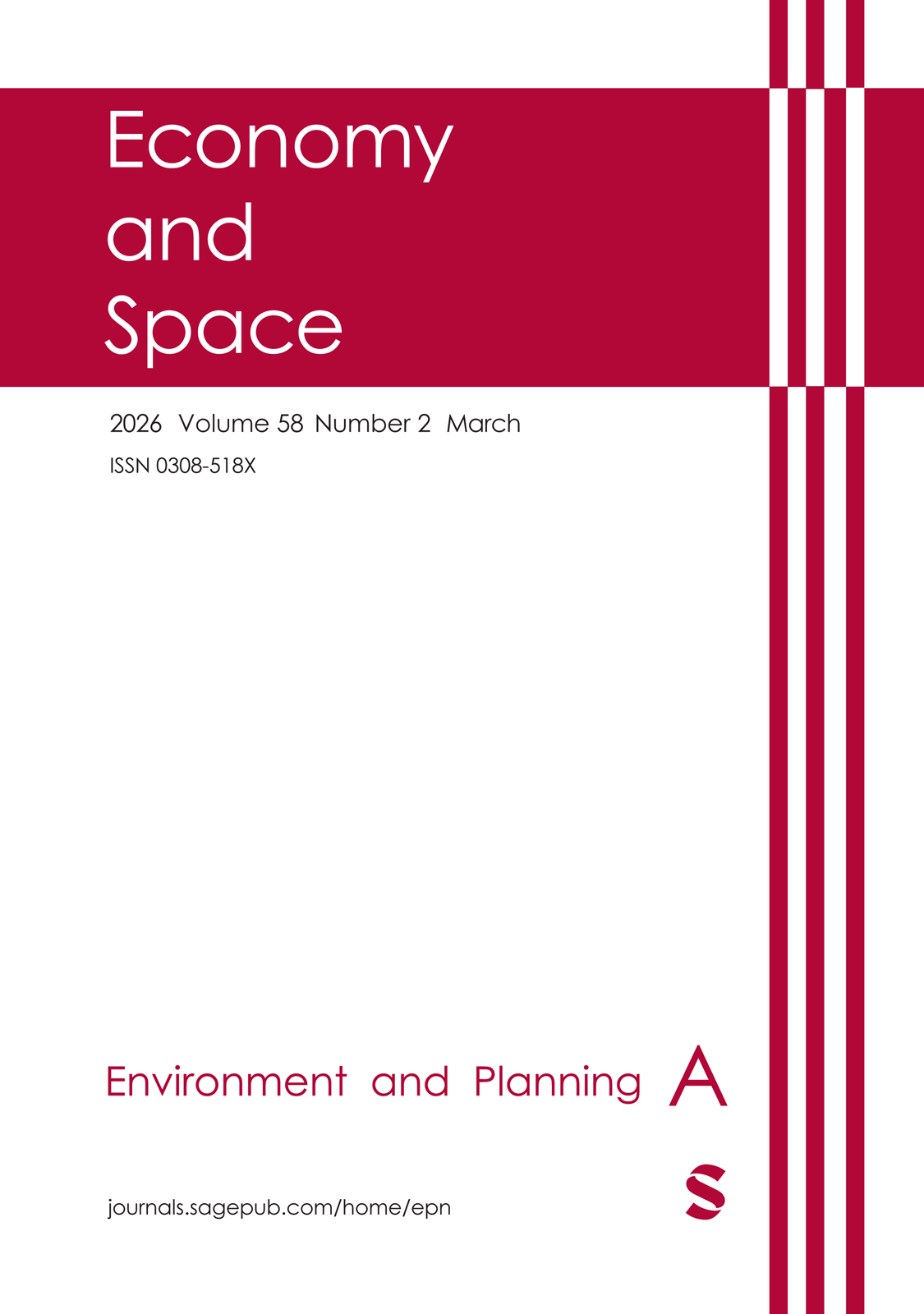
Assistant Professor Sanjeev Routray recently published a journal article entitled “Articulations: Production and social reproduction in an industrial neighborhood of Delhi” in Environment and Planning A: Economy and Space.
The paper examines the articulation of capitalist relations with caste, ethnic, gender, and spatial relations in context-specific ways, which not only produce a structure of domination but also “minor liberations” in an industrial neighborhood in Delhi. The articulation of capitalist relations with these relations overdetermines two specific dynamics: (1) skilling, deskilling, and reskilling, and (2) social reproduction. By drawing on Stuart Hall’s framework of articulation, I show how capital leverages social differences rather than homogenizing them in pursuit of endless accumulation. I combine Hall’s insights with the concepts of social reproduction theorists, especially Kristin Munro, to demonstrate the entanglements of production and social reproduction, and the deeply intertwined economic and non-economic relationships in their complex articulations. By drawing on ethnographic research and the life histories of six workers, I examine how the process of skilling is a dynamic issue rather than a static attribute of an individual, to be understood in the context of the articulation of capital relations with caste, ethnic, and spatial relations. Similarly, I demonstrate workers’ relationships and affiliations with capital, the state, and other actors in their pursuit of social reproduction through mutual provisioning and ingenuity across distinct spaces. Finally, I argue that the demolition of low-income neighborhoods and factory closures, embodied in urban restructuring projects, treat factory workers as autonomous individuals who can sell their labor power across the city, thereby rupturing the social and cultural fabric of the factory workers’ communities and undermining their spatial practices in search of livelihood in the city.
Read the article.